Sunday, July 21, 2013

SCHMITZ PARK 7-21&22-13

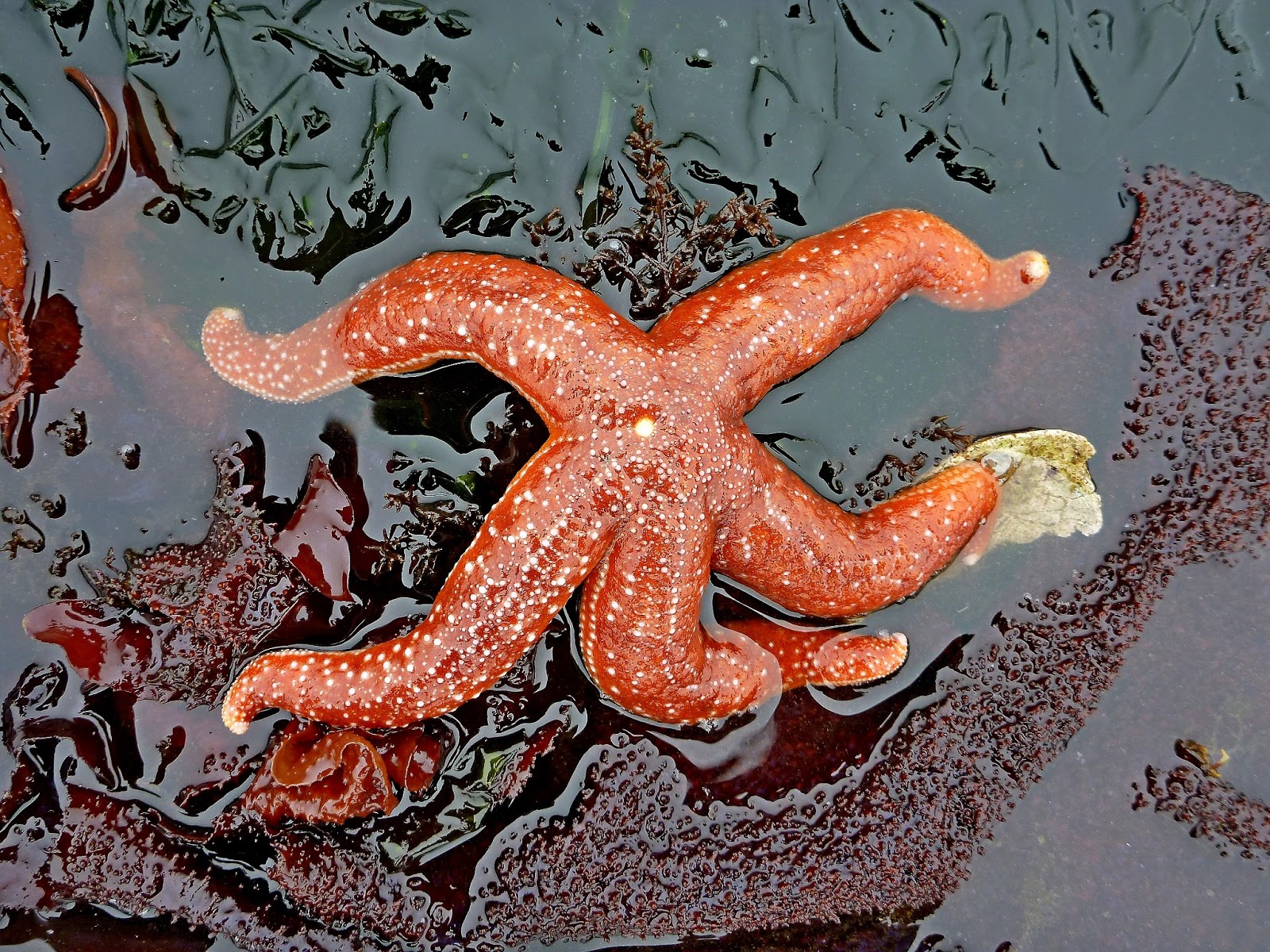
Schmitz Park provided its usual collection of flora and fauna at low tide.  However, there were a large number of Frosted Sea Slugs, (Dirona albolineata) commonly subtidal on the surface of large mats of seaweed.  They have a very catholic diet, feeding on small snails which the crack open with strong jaws; sponges, bryozoans, tunicates, and small crustaceans are also on the menu.  Sponge eating Sea Lemons, Moon Snails, Sunflower and Mottled Sea Stars, were also abundant.  Drifting Fried-egg Jellyfish were also common; coming to a sad fate as they washed ashore.  Tomorrow, July 22 offers a minus 3.1 ft. low tide followed by a minus 2.8 feet on Tuesday......good time to go exploring as these are the last best tides of Summer.
Some images are from Alki Beach Park - just a mile north of Schmitz....on the previous day.

Tentacles of Fried-egg Jellyfish

Fried-egg Jellyfish

Frosted Sea Slugs (Dirona albolineata)

Frosted Sea Slug

Graceful Kelp Crab

Lacuna Snail with egg mass hat

Lined Chiton (feeds on coralline algae)

Moon Snail siphon

Moon Snail

Mottled Sea Star

Oregon Cancer Crab


Eelgrass Isopod

Hairy Chiton

Monterey Sea Lemon

Rose Anemone

Yellow sponge on clay

Spotted Sea Slug

Spotted Sea Slug

Barnacle Eating Sea Slugs laying eggs

Chiton bulldozing Plumose Anemone off piling

Crescent Gunnel

Feather Duster Worm at low tide

Lacuna Snail eggs masses

Moon Snail siphon 

Moon Snail with siphon exposed

Mottled and Purple Sea Stars

Plumose Anemone

Mud Ribbon Worm

Spaghetti Worm 


Dwarf Teardrop Crab

Octopus den

Graceful Kelp Crab

Hairy Chiton

Heath's Dorid

Kelp Crab with barnacles

Shield Limpet on encrusting algae

Moon Snail laying eggs

Mottled Star eating False Jingle Shell

Mottled Star losing water

Noble Sea Lemon

Noble Sea Lemon

Piddock Clam in clay


Sharp-nose Crab

Sunflower Star with meal leftovers
Hairy Cancer Crab


Thursday, July 18, 2013

AUTHOR BECOMES WORLD'S GREATEST HIKER

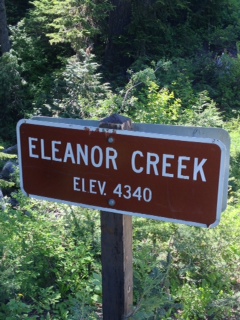
On July 17th your blog author (that would be humble me) became acknowledged as the world's greatest hiker.  The proof is in the attached images. Two sides of the same sign!


At the spot where Eleanor Creek crosses National Forest Road 73 in 2 seconds I hiked an elevation gain of 1,360 feet.  Just a step from one side of the sign to the other and the new record was set.  While the uphill part of the hike was relatively easy the downhill trip really killed my knees....


Tuesday, July 16, 2013

Last Great Low Tide Days Starting July 20th

JULY 20-24 will see that last of the minus 2 ft or lower tides of the Summer.  So if you live in Washington State it's a great time to do some beach exploration.  Tides in Seattle are as follows:

July  20  - minus 2.3 feet at 9:25 am
July 21  -  minus 2.9 feet at 10:15 am
July 22  -  minus 3.1 feet at 11:03 am
July 23  -  minus 2.8 feet at 11:51 am
July 24  -  minus 2.1 feet at 12:37 pm
I make sure I'm on the beach one hour before low tide to follow it out and have at least 1 hour after the low tide to explore.
For reference; the 0 ft. tide level is the average of the lower low tides for the period, so anything in the minus area is a good low tide.

August 17-21 has a series of minus tides but none will reach minus 2 ft.

Good beaches in Seattle for viewing include:
Constellation Marine Reserve in West Seattle
Golden Gardens in North Seattle (far north end)
Lincoln Park in West Seattle (south end)
Emma Schmitz in West Seattle
Carkeek Park (far north end)

For information on Beach Naturalist locations and dates visit The Seattle Aquarium website: http://www.seattleaquarium.org/beach-naturalist
All these sites are Marine Reserves; taking of anything from the beach is not allowed.

Alki Lighthouse

Thursday, July 11, 2013

Puget Sound Watershed 3 Hikes

OK, it's not salt water...but it is soon to mix with salt water of Puget Sound.  So this little hike into the Stilliguamish River watershed fits nicely on the blog.  It's July 10th and you might think, if you live outside the Western Washington area, that by now snow from last winter at a level of 3,500 feet would be gone long ago.  But here in the Cascades and Olympic mountains, due to an extremely heavy snow pack, many years the snow remains well into August even at lower elevations.  So hiking in the Western Cascades often is only snow free for a couple of months each year.  This is true in 2013.
Our Cutthroat Lakes trail passes through an area that receives upwards of 180 inches of precipitation per year, much of it snow.  Plants that normally grow at higher elevations are found lower down is this area due to the extreme snow pack.  Old growth Hemlock, and Cedar form a forest of exceptional beauty and value.  The area is an State Natural Resource Conservation Area as well due to its exceptional qualities.
Yesterday's hike was often on snow...sometimes challenging due to places where the melting snow is undercut by streams making crossing somewhat risky.  The trail remains somewhat difficult to follow as snow covers much of it in the deep woods but happily someone has flagged the route.  In the meadows at 4000 feet snow still covers the large ponds to a depth of 2-4 feet. It will be August before the tadpoles get any direct sunlight in their ponds. Frogs and toads are common in the very cold streams and often can be seen sitting on the snow......hope they have plenty of sunblock.  With all the water from melting snow the bugs were out in full force...more than I can remember seeing on this hike.  Happily a quick splash on Jungle Juice on exposed parts kept them at bay.....Deer Flies were few but always a real pain.....a few will never bother a deer again.  Next purchase; Deer Fly Patches.
I recommend this hike to anyone.....but suggest waiting until August when the trail will likely be snow free, much easier to follow and without the hazards of rotting snow on boulder fields.  R/T distance 8-10 miles depending on whether you hike to Upper Cutthroat Lake or top of Bald Mountain.  Huckleberries are abundant in the meadows around and above Cutthroat Lake by September of SOME years....good berry years also attract numerous Black Bears.  On one late Summer hike we saw three bears in about 10 minutes...all stuffing themselves with berries.
The second and third hikes were at Mt. Rainier National Park.  The hike to Van Trump Park began at a late 4 pm due to car problems (not my car) that ate up much of the day.  However we were rewarded for our lateness as the mountain hid itself in clouds until about 6:30 pm just as we were reaching Van Trump Park for the view of Rainier.....perfect timing.  The early hikers missed the view.  Mt. Goats were also present making for the perfect treat.
Hike 3 was a rather lazy hike to Grand Park via the back door of Lake Eleanor.  While 9 miles is not a short day hike the elevation gain is a modest 1100 feet.  Perfect weather and few people...ah, heaven.


 Mt. Pilchuck Natural Conservation Area 

Dreaded Deer Fly - no longer bothering deer

Cascade Frog Eggs

Cascade Frog

Noelle with Northwest Toad

Nurse Log

Western Coralroot

Western Coralroot - look like Yellow Headed Pink Geese taking flight.

Elf Saddle Mushroom

Shooting Star

The ponds....Bald Mt.

Nasty little biting flies...banished by Jungle Juice

Air Conditioning stop on trail

Spring vs Winter

Low Meadow 1 mile up trail

Click Beetle

Interesting fungus

Northwest Toad in stream
Bleeding Heart
Beargrass

Lake Eleanor

Frog Pond

Grand Park trail

Emmonds Glacier Mt. Rainier

Phlox

Grand Park

 Willis Wall Mt. Rainier
Mt. Rainier Grand Park


Wild Flowers Grand Park

Indian Paintbrush and Lupine

Paintbrush 

Van Trump Park and author

Gretchen and Karen and dead VW

Mt. Rainier from Van Trump Park

Yum...Yak

Rainier from Van Trump Park

Mt. Goats Van Trump Park

Glacier Mt. Rainier


Avalanche Lily

Comet Falls

Comet Falls