Sunday, July 3, 2016
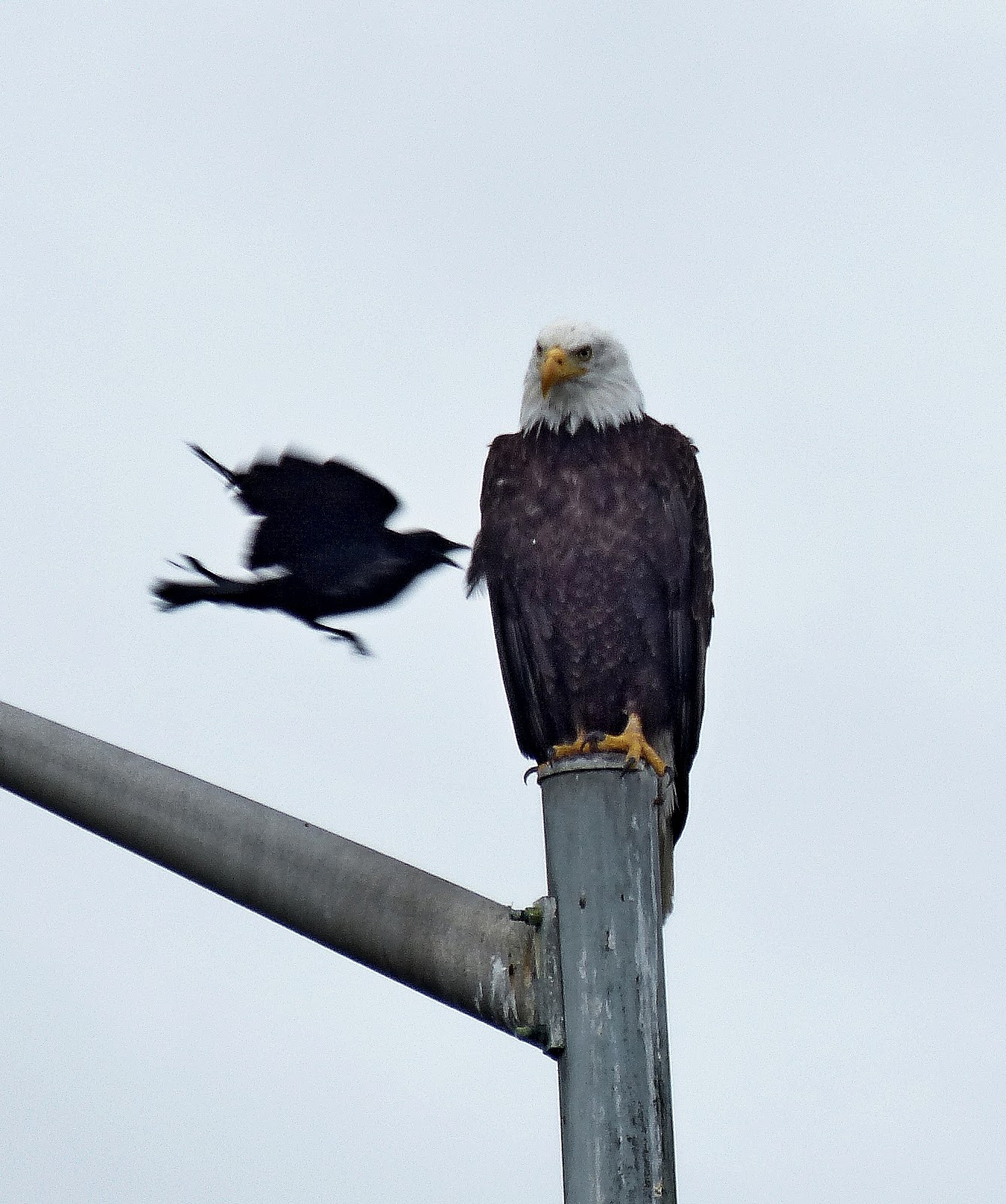
A VERY LAID-BACK EAGLE
Lately a Bald Eagle has been spending the dawn hours at Anchor Park in West Seattle. This eagle is very laid-back. People approach within 15 feet and the bird simply sits and sometimes looks...but does not fly. In time the bird may move to a light standard close by...perhaps for a better view but this move invariably enrages the local crow population which set upon the eagle with determination. Finally the eagle abandons its perch and moves off to a day navigation marker 1/4 mile offshore. Tomorrow will likely see the same story play out. See you at Anchor Park at about 5:30am???
FAUNTLEROY FERRY DOCK - JULY 3 2016
In the last post I covered my take on a refuge from SSWD as being under docks where the sun never shines. It's not only sea stars that may benefit from being out of the sun but other invertebrates seem to be more common there than on the open beach. Sea Pens are common under the dock in very shallow water...minus 2' tide level where they are not seen outside this area in water anywhere near that shallow. Geoduck clams are also common under the dock, are are Horse Clams. Again today Purple Stars were common and large.....So if you want to see some critters that may not show up on your local beach try going under a dock and checking out the pilings and the bottom...you could be in for a treat.
HAPPY 4TH OF JULY FOLKS!
![]() | |
| Rose Anemone |
![]() |
| Hairy Chiton |
![]() |
| Feather Duster Worms |
![]() |
| Geoducks |
![]() |
| Geoduck |
![]() |
| Helmet Crab with barnacles |
![]() |
| Horse Clam (Gaper) |
![]() |
| Juv. Mottled Star |
![]() |
| Leather Star |
![]() |
| Lined Sea Slug (sea pen predator) |
| Pigeon Guillemot |
| Pigeon Guillemot |
| Giant Plumose Anemone |
![]() |
| Pigeon Guillemot |
![]() |
| Sea Pen |
![]() |
| Sun Star (Solaster stimpsoni) |
![]() |
| Hairy Sea Squirt and barnacles on Helmet Crab |
Tuesday, June 7, 2016
SEA STAR REFUGE FROM SSWD?
Since the Summer of 2013 Sea Star Wasting Disease has devastated the population of many species of sea stars on the Pacific Coast of America. Among the species affected are Purple Stars and Sunflower Stars. In surveys I've completed at Constellation Marine Reserve in West Seattle the pupulation of Purple Stars (Pisaster ochraceus) has declined by over 90% and Sunflower Stars by the even more. While the total cause or causes remain unknown a densovirus is implicated in the decline. This virus has been around for many decades and why it should now be causing this great wasting disease in stars is a mystery.
I have noticed that certain areas still are home to large Purple Stars that have survived the wasting in relative healthy numbers and while some stars in these areas have become diseased the population of large stars has remained relatively intact.
These areas are on pilings under condos built over water, the pilings of the Fauntleroy Ferry Dock in West Seattle and the floating dock at the West Seattle Water Taxi in West Seattle. All three of these areas share one habitat property in common.
Sea Stars living on the pilings and floating docks are shaded from direct sunlight.
This protects the stars from direct sunlight, UV radiation, hot Summer air temperatures. In addition the stars are not exposed to heavy fresh water runoff during large rain events. Water temperature during high tides should be equal in all habitats due to current movement of water but in tidepools on the beach Summer exposure can greatly raise the water temperature.
Living in the shaded habitats likely reduces environmental stress on the Purple Stars. The reduction of stress may make the stars more resistant to SSWD. As a result there are still healthy populations of large stars on the shaded pilings while on the exposed intertidal areas only very limited numbers of much smaller stars survive.
While I have only limited data it would be interesting to know how populations of Purple Stars are doing on pilings in other areas.
I checked the pilings under the Fauntleroy Ferry Dock on June 6th and found a healthy community of medium to large Purple Stars (50+), two healthy Leather Stars and two small healthy Sunflower Stars and a similar number of Mottled Stars.
In comparison my SSWD survey of Purple Stars on the south side of the breakwater on S. Alki turned up 31 healthy medium size stars and zero with SSWD. It appears for now that SSWD is in decline.
Only time will tell but at least we have some good news for the first time since SSWD was discovered on the Washington Coast in 2013.
I have noticed that certain areas still are home to large Purple Stars that have survived the wasting in relative healthy numbers and while some stars in these areas have become diseased the population of large stars has remained relatively intact.
These areas are on pilings under condos built over water, the pilings of the Fauntleroy Ferry Dock in West Seattle and the floating dock at the West Seattle Water Taxi in West Seattle. All three of these areas share one habitat property in common.
Sea Stars living on the pilings and floating docks are shaded from direct sunlight.
This protects the stars from direct sunlight, UV radiation, hot Summer air temperatures. In addition the stars are not exposed to heavy fresh water runoff during large rain events. Water temperature during high tides should be equal in all habitats due to current movement of water but in tidepools on the beach Summer exposure can greatly raise the water temperature.
Living in the shaded habitats likely reduces environmental stress on the Purple Stars. The reduction of stress may make the stars more resistant to SSWD. As a result there are still healthy populations of large stars on the shaded pilings while on the exposed intertidal areas only very limited numbers of much smaller stars survive.
While I have only limited data it would be interesting to know how populations of Purple Stars are doing on pilings in other areas.
I checked the pilings under the Fauntleroy Ferry Dock on June 6th and found a healthy community of medium to large Purple Stars (50+), two healthy Leather Stars and two small healthy Sunflower Stars and a similar number of Mottled Stars.
In comparison my SSWD survey of Purple Stars on the south side of the breakwater on S. Alki turned up 31 healthy medium size stars and zero with SSWD. It appears for now that SSWD is in decline.
Only time will tell but at least we have some good news for the first time since SSWD was discovered on the Washington Coast in 2013.
| Purple and Sunflower Stars under ferry dock |
| Purple and Sundlower Stars under ferry dock |
| Large Purple Stars on piling |
| Purple Stars under ferry dock |
| Sea Pen under ferry dock |
| Moon Snail and Horse Clam under ferry dock |
| Leather Star on piling under dock |
| Mottled Star with worm from Lincoln Park Beach |
Friday, May 27, 2016
SO VERY DIFFERENT.....
May 27th at Alki was a day of contrast. Two animals from very different worlds...one dead the other very much alive. From the underworld to the sky above.....
SEA STAR WASTING DISEASE UPDATE
Survey on May 22nd on south side of breakwater at South Alki - Constellation Marine Reserve area.
Pisaster ochraceus (Purple Star) 34 healthy and 0 with SSWD. All were approximately hand size and likely the same age class. One individual with SSWD was seen north of the breakwater on the beach but was not part of the survey. So SSWD is still in the area but seems to be deminished from previous years.
Sunday, April 10, 2016
GONE GEESE AND SWANS
APRIL 7 2016 - Made my first trip to the Skagit Valley for the Tulip Festival. It will be my last. Tulips are great (but you can get tuliped out) and the traffic is a pain. The Snow Geese and Swans have all departed for the north. So this is not Puget Sound Marine Life type blog entry...just a bunch of spring flowers....:)
Subscribe to:
Posts (Atom)