Intertidal Zonation:
In Puget Sound the tidal heights from lowest low to highest high vary approximately 16 feet maximum in Seattle, 22 feet at Olympia. The farther south into Puget Sound the greater the tidal range due to the restricted water area of South Sound. This is a moderate exchange compared worldwide. The greatest exchance takes place in Canada's long Bay of Fundy (52 ft.), while some in Alaska are over 30 ft. as are the tides at the northern end of the Sea of Cortez in Baja, Mexico. Hawaii sees only tidal exchanges of a few feet. (for readers outside the U.S.A. please excuse our inability to switch to the metric system) :).
Animals, seaweeds and sea grasses are affected by the constant rise and lowering of the tide. While some intertidal organisms are adapted to withstand wide ranges in salinity, heat, light, and drying others are less adapted. Some species a restricted to tidal areas where predators or competitors are not too great a threat.
In short, two factors determine which organisms live where in the intertidal: Biological and Physical.
Animals well protected from drying, UV radiation, cold, and excessive heat can thrive in the highest intertidal levels...being able to take long naps doesn't hurt either. Highest living barnacles may be able to feed only a few hours per month, napping the remaining time away...the ultimate couch potatoes. Most intertidal sea stars have heavy complete hard skeletons to protect from excessive water loss during low tide exposure.
Intertidal crabs are almost exclusively flat in shape to allow easy access to damp spaces under rocks where they spend the low tide protected from drying and predators above....you know, the gulls.
So if you should happen to turn over small rocks, make sure you turn them gently back to their original position to protect the critters living under and attached to the bottom of the rock and living on the top of the rock....better yet turn over few or no rocks.
For additional information a slide show presentation can be accessed under ZONATION in the BUZZ LINKS section.
Friday, May 27, 2011


Thursday, May 26, 2011
EELGRASS
EELGRASS, THE RICH MEADOW
Eelgrass habitat is highly important to many species in Puget Sound.
There is a new link in the BUZZ LINKS section to Eelgrass which will take you to a slide presentation on the subject.
Eelgrass habitat is highly important to many species in Puget Sound.
There is a new link in the BUZZ LINKS section to Eelgrass which will take you to a slide presentation on the subject.
Wednesday, May 25, 2011
Oil Pipeline Goldmine
Did you know that the frequency of occurrence, in the gut of the Penpoint Gunnel, of Gammaridea is 51.14% while the frequency of Harpacticoida is only 13.64%? You didn't? Shame on you. :)
Oil's Golden Result
In the 1970's there was building pressure to build an oil terminal in Northern Puget Sound to handle oil from Alaska, and there was push back. At the time there was almost a complete lack of economic and environmental information about the North Puget Sound Region. In 1974 Washington State initiated the North Puget Sound baseline study through the Department of Ecology which was designed to evaluate the oceanographic, biological, and economic resources of the region. One result was the publication EPA-600/7-79-259. Food Web Relationships of Northern Puget Sound and the Strait of Juan de Fuca.
The opening question can be answered by checking out the contents of the above publication....and the great thing is you can download it for free at : http://www.epa.gov/nscep/index.html
This website is a real gold mine of publications on marine life, of Puget Sound and other areas...as well as all kinds of other EPA publications.
Food Web Relationships of Northern Puget Sound and the Strait of Juan de Fuca.
This publication above all is the one I recommend if you want to know who eats whom....and all about food webs. It covers; invertebrates, fish, birds, mammals.....the whole caboodle. Download it and you will have one of the best references available on Puget Sound marine life.
Oil's Golden Result
In the 1970's there was building pressure to build an oil terminal in Northern Puget Sound to handle oil from Alaska, and there was push back. At the time there was almost a complete lack of economic and environmental information about the North Puget Sound Region. In 1974 Washington State initiated the North Puget Sound baseline study through the Department of Ecology which was designed to evaluate the oceanographic, biological, and economic resources of the region. One result was the publication EPA-600/7-79-259. Food Web Relationships of Northern Puget Sound and the Strait of Juan de Fuca.
The opening question can be answered by checking out the contents of the above publication....and the great thing is you can download it for free at : http://www.epa.gov/nscep/index.html
This website is a real gold mine of publications on marine life, of Puget Sound and other areas...as well as all kinds of other EPA publications.
Food Web Relationships of Northern Puget Sound and the Strait of Juan de Fuca.
This publication above all is the one I recommend if you want to know who eats whom....and all about food webs. It covers; invertebrates, fish, birds, mammals.....the whole caboodle. Download it and you will have one of the best references available on Puget Sound marine life.
Tuesday, May 24, 2011
Eggs of the Intertidal
Eggs found in the intertidal are often the most difficult items to indentify. Seattle Aquarium Beach Naturalists have been equipped with ID sheets to make the life easier but for others perhaps this group of images will be of some use. New image: illustration added at bottom of Pile Worm eggs...these egg masses are often found floating in the drift in summer and have been a mystery for some time. This ends up as a clump of dirty tan eggs about the size of a jumbo chicken eggs....individual eggs are not visible without a microscope. Will try to add image of actual egg mass next time I see one.
Things to Remember:
Arthropod females hold eggs and release hatched larvae (crabs, barnacles, shrimp).
Echinoderms broadcast spawn and do not attach eggs (a few Sea Stars retain eggs till they hatch)
Most worms broadcast spawn some lay attached eggs.
Some Mollusks broadcast spawn....(chitons, limpets, some snails).
Fish often attach eggs (Scuplins, Herring, Lingcod, Smelt) others broadcast spawn (Cod, Flounder) or have live births (Dogfish Sharks, Perch, Rockfish)
Cnidarians mostly broadcast spawn or divide asexually or retain eggs and release tiny adults
BEACH EGGS
 |
| Frilled Whelks laying eggs |
.JPG) |
| Dungeness Crab with eggs |
.JPG) |
| Gravid Tidepool Sculpin |
 |
| Unidentified Polychete worm eating Bubble Shell Eggs |
.JPG) |
| Gravid Tidepool Sculpin |
 |
| Northern Kelp Crab with eggs |
 |
| Spinyhead Sculpin male with eggs |
 |
| Sea Lemon laying eggs |
 |
| Barnacle Eating Nudibranch with eggs |
 |
| Big Skate eggs in egg case |
 |
| Black-clawed Crab with eggs |
 |
| Bubble Snail with eggs |
 |
| Bubble Snail with eggs |
 |
| Burrowing Sea Cucumber with eggs |
 |
| Gumboot Chiton laying eggs |
 |
| N. Clingfish with eggs |
 |
| Crescent Gunnel with eggs |
 |
| Ghost Shrimp with eggs |
 |
| Green Annelid worm eggs |
 |
| Green Annelid worm that laid eggs above |
 |
| Graceful Cancer Crab with eggs |
 |
| Lacuna snail eggs on eelgrass |
 |
| Plainfin Midshipman eggs |
 |
| Plainfin Shipman male with eggs |
 |
| Moon Snail with egg case (sand collar) |
 |
| Hairy Triton with eggs |
 |
| Red Octopus with eggs |
 |
| Giant Pacific Octopus with eggs |
 |
| Sculpin eggs |
 |
| Shaggy Mouse sea slug with eggs |
 |
| Sea Star female spawning |
 |
| Sitka Shrimp with eggs |
 |
| Taylor's Sea Hare eggs |
 |
| Frilled Dogwinkle with eggs |
 |
| Sea Lemon sea slug eggs |
 |
| Opalescent Sea Slug with eggs |
 |
| Opalescent Sea Slug eggs on Moon Snail sand collar |
.JPG) |
| Frilled Whelk egg capsules |
c.jpg) |
| Frilled Whelks mating |
 |
| Rockweed Isopods mating |
 |
| Aggregate Anemone dividing |
 |
| Emarginated Whelk egg capsules |
 |
| Flatworm and egg masses |
 |
| Rockweed Isopod with young at pouch |
 |
| Rockweed Isopod with young at pouch |
.JPG) |
| Plainfin Midshipman eggs |
.JPG) |
| Porcelain Crab with eggs |
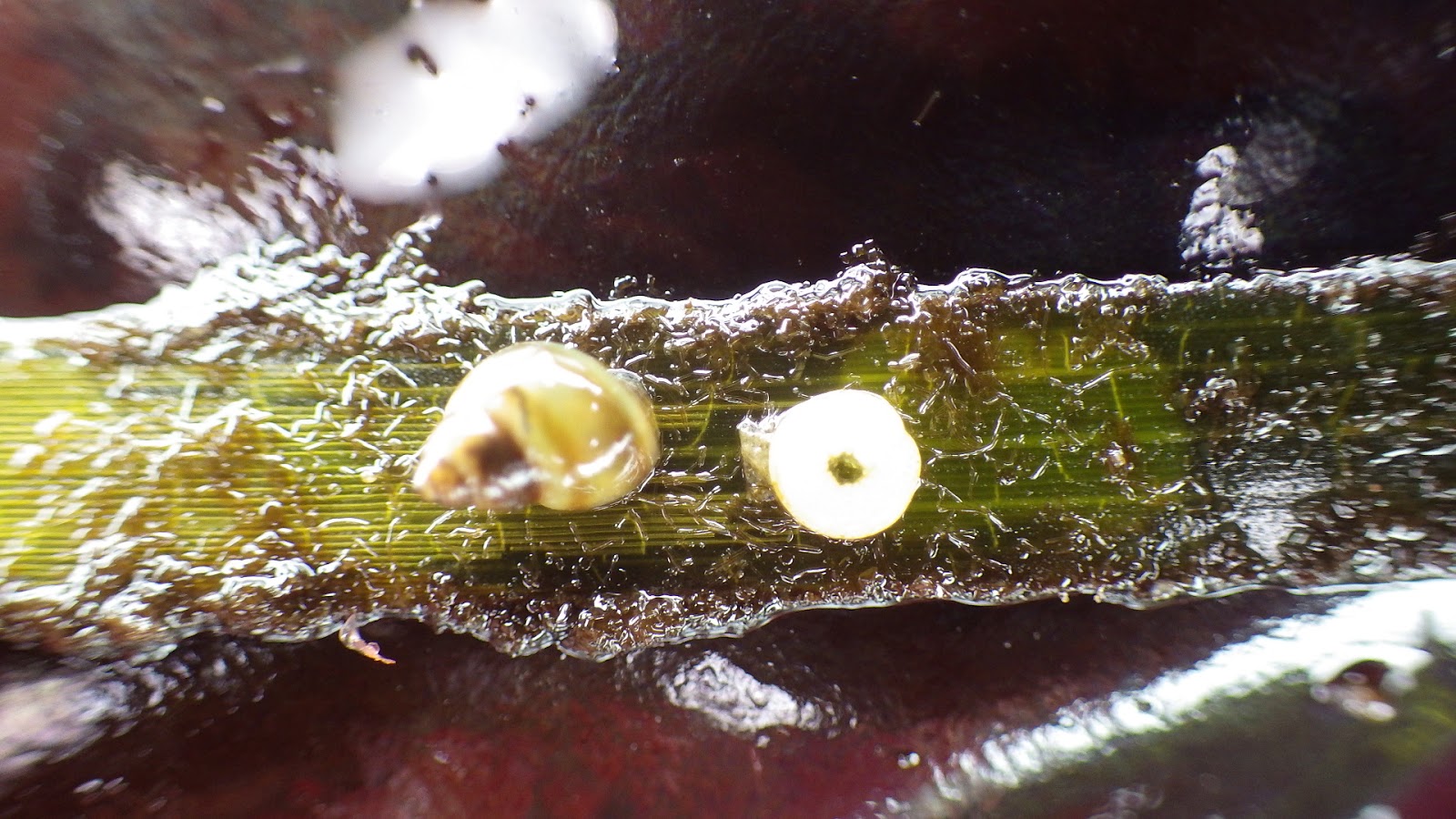 |
| Lacuna Snail with eggs |
em.jpg) |
| Hairy Shore Crab with eggs |
.JPG) |
| Noble Sea Lemon eggs |
 |
| Lacuna Snail eggs |
 |
| Lacuna snail with egg mass on shell |
 |
| Pile Worm eggs |
Subscribe to:
Posts (Atom)