Tuesday, January 27, 2015

SKAGIT DELTA BIRD TRIP 1-26-15 AND STRANGE WEATHER

Anyone who has been watching the Weather Channel lately knows all about the big Nor'easter dumping lots of snow in the NE.  The story here in Seattle gets very little play but is just as amazing weather wise.
The temperature at night over Western Washington at 5,000 feet is higher than the average July temperature at the same altitude.  Seattle temperature on Monday reached 65 degrees.  I took advantage of this June in January weather for a trip up to the Skagit Delta to see the winter birds.
We searched high and low for Snow Geese but only observed on large flock in the air south of the delta.  Trumpeter Swans were more abundant that I've ever seen on the Skagit, and a few dozen Tundra Swans were present.  The most unusual sighting was a Long-eared Owl. being observed by a couple dozen bird watchers.
This warm weather (which is predicted to remain for the rest of winter) bodes badly for the snowpack in both the Cascade and Olympic mountains...and for water this Summer.  What is even more disastrous is the drought in California which has worsened this winter.  This is a much bigger story than a short time snow storm in New England.
Well....at least it was a good day for photography....

Long-eared Owl

Mt. Baker

Northern Harrier

Northern Harrier

Trumpeter Swan

Red-tailed Hawk

Red-tailed Hawk

Northern Harrier

Northern Harrier

Trumpeter Swan

Long-eared Owl
Skagit Delta bird watchers at Long-eared Owl roost
 

Sunday, January 25, 2015

CALIFORNIA GRAY WHALE DIES FROM SHIP STRIKE IN PUGET SOUND

The body of a California Gray Whale was located under the Colman Ferry Terminal dock on Seattle's Waterfront this week.  The whale was a female approximately 2-3 years old an in excellent health prior to being struck by the ships propeller.  There were 6 deep gashes in the whale that were determined by scientists to have been the cause of death. 
The California Gray Whale population is considered healthy and not endangered.  Whales die of natural causes and wash ashore occasionally on Puget Sound beaches.  It is sad however to see a healthy whale killed due to contact with humans.  It is unlikely that the ship ever saw the whale or even knew it had hit it.
The whale had likely been dead only a few days or less before being discovered under the Colman Ferry Terminal dock so was likely hit by a ship near Seattle.
California Gray Whales migrate between Baja California and the Arctic each year.  Calves are born on the winter grounds in Baja lagoons and make the first trip north with their mothers.  After feeding in Arctic waters during the Summer ice free months the whales make the return journey to Baja California lagoons for another season of mating and birthing.
California Gray Whales are not uncommon seasonally in Puget Sound and small numbers are found every year feeding on ghost shrimp in the Everett area during the Spring months. 
While uncommon the rest of the year in Puget Sound Gray Whales have been seen in the Sound every month of the year.
For more information on this whale and images of the necropsy click on the link below:

http://blubberblog.org/files/fb7e43fb87cae1da207203475263f9bc-638.html


Below are some images of the Gray Whale including a few of a necropsy conducted on a whale that died near Tacoma WA in 1991.

California Gray Whale

California Gray Whale blow

California Gray Whale head - paired blowholes

California Gray Whales in Baja California lagoon

California Gray Whale approaching boat

Amphipods - main food of Gray Whales in Arctic waters


New born Gray Whale in Baja California
Gray Whale baleen (1991)

Gray Whale testes (1991)

39 foot Gray Whale from Tacoma (1991)

Gray Whale intestines (1991)

Sand in Gray Whale stomach (1991)

Gray Whale necropsy (1991)

Gray Whale necropsy (1991)

Gray Whale blubber and skin (1991)

Tuesday, January 6, 2015

THE RAIN SHADOW

I noticed that this week of Jan 4th 2015 will bring another Arctic blast down on much of the country with even Atlanta, GA forecasting below zero temp.
Meanwhile Western Washington has made the news with massive flooding on many rivers,  With flooded down towns, mud slides, road washouts....all thanks to that Pineapple Express weather system from Hawaii.  Our low temps this week will be in the mid 40's with highs in the 50's...quite warm even for our marine climate.  Much of our snow pack has been washed away and many ski areas are closed.  It was happening just as forecast....warmer winter due to moderate El Nino and the huge blob of warm water in the NE Pacific Ocean.
But while Western Washington was taking it in the shorts with extremely heavy rains Seattle was sitting in a tiny (city size) rain shadow provided by the Olympic Mountains.  This happens whenever the rain and clouds come directly from the west rather than the more common pattern from the southwest.  To get some idea of how strange this rain pattern can be in Western Washington you only have to look at a radar image.....Blue is rain, Green is heavier rain, Yellow is heavy rain....White is dry.
This radar image is from January 4th but is the same on January 5th.

Stay Warm,


Tuesday, December 9, 2014

GROOVED CLAM SHELL MYSTERY

Back in May I posted on the grooved clam shell mystery.  We have been asking around the marine biology community for ideas on what might be causing this and have come up with one hypothesis that seems reasonable to lots of folks.....but beware we have no smoking gun.

Hypothesis:

The clam shells are being grooved by moon snails.
Moon snails normally drill very specifically located holes in clam shells during feeding with the radula organ.
The grooves are in the same size area as the normally drilled holes.
Moon snails feed on clams that are sometimes "contaminated" with PSP toxin.
Moon snails bio-accumulate the toxin in their bodies.
The toxin may be affecting the moon snails nervous system causing the snails to loose the ability to drill holes in the proper location and causing the random grooves in the shells.
Many thanks for Betsy Peabody, Brady Blake and Camille Speck and Robert Paine, Alan Kohn and a host of others for ruminating on this and providing valuable input.
In an interesting connection with this hypothesis there is a quote in the book "Teachings of the Tides" from a 93 year of Manhousat tribal member (west side of Vancouver Is.).  He states that the Manhousat people (who ate most things found in the intertidal) would not eat moon snails because they believed that if you did you would become "stupid".  This may have basis in fact since the accumulated PSP toxin in the snails could affect the nervous system of humans if consumed....making them "stupid".
This is a fascinating little book about what the Manhousat people collected, how they collected and prepared items from the intertidal for food.  You can get it at Amazon (used for about $20 - or buy a new copy for $2,432 plus shipping - you would think they could at least offered free shipping).

HAPPY HOLIDAYS


Monday, December 1, 2014

10 YEAR REPORT ON SOUTHERN RESIDENT COMMUNITY KILLER WHALES

NOAA has published a report on the study of Southern Resident Killer Whales that has take place over the past 10 years.  Lots of new finding here....What they eat, who they mate with, how boat interactions affect them....etc.  Download the entire report here:

http://www.nwfsc.noaa.gov/news/features/killer_whale_report/


HAPPY HOLIDAYS

BUZZ

SEASTAR WASTING AND A VIRUS

CHECK LINK FOR UP TO DAY INFO ON THE VIRUS AND SEA STAR WASTING:
Densovirus associated with sea-star wasting disease and mass mortality
http://www.eeb.ucsc.edu/pacificrockyintertidal/data-products/sea-star-wasting/updates.html

This story is not over by a long shot but major progress has be made in connecting a densovirus with sea star wasting syndrome.  Many questions reamain:   Why was this outbreak so devastating?
Was sea temperature a factor in the spread of the disease?  Will juvenile sea stars survive to replace the lost population?  What other factors may have been involved in the disease?  Since this virus has been around for decades why did it now become so wide spread and devastating to so many species at the same time?  Was overpopulation of sea stars a factor in the spread of the disease?  With some reports of diseased sea urchins and sea cucumbers it remains open as to whether the same densovirus is implicated in these instances.
Stay tuned......this is going to be news for a long time...


HAPPY HOLIDAYS TO ALL

BUZZ 

Wednesday, October 15, 2014

THE BEARTOOTH - ANOTHER WATERSHED

With the lack of good low tides in the Autumn it was time to do another road trip.  I'd been wanting to do the Beartooth Highway for many years but something always derailed that trip....but not this time.
The Beartooth Highway runs 66 miles from Red Lodge to Cooke City Montana just to the northeast of Yellowstone National Park.  We tried to time the 10,974 foot Beartooth Pass to good weather as a cold front with snow was headed south from Canada.  Our timing was good and we crossed the Beartooth one day before it was closed due to snowfall.  The Beartooth Highway has a reputation of being one of if the the most spectacular highways in the United States.  I agree with that.
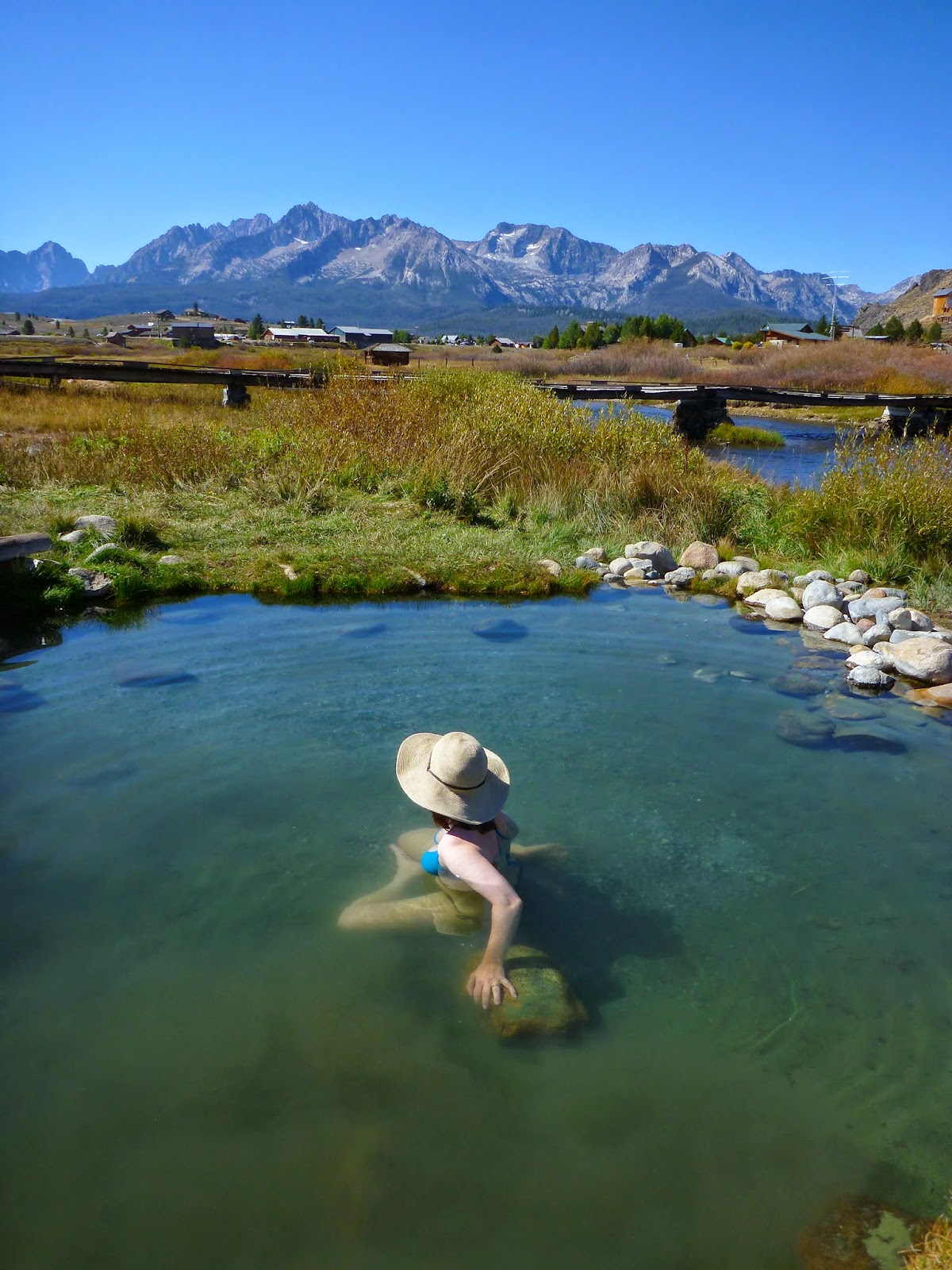
After the Beartooth we chose a route back home that included a number of stops at hot springs in Idaho.  In addition we visited Yellowstone, Grand Teton, John Day Fossil National Monument and friends on Mosier OR.

Yellowstone Falls


Gretchen - Yellowstone

Yellowstone

Beartooth

The Beartooth

Beartooth

Beartooth Highway

Mt. Sheep

Mt. Sheep

Sawtooth Range

Yellowstone River

Yellowstone burn area

Sawtooth Range

Beartooth Highway

Gretchen - hot spring

Beartooth Pass

Marmot

Turtle crossing

Stanley hot spring

Stanley hot spring

Gretchen hot spring

Another hot spring

Pronghorns

Turtle relocation project

Antelope OR

Beartooth Highway

Yellowstone Bison

John Day Fossil National Monument

John Day

Gretchen John Day

Gretchen John Day

John Day River

John Day

Painted Hills John Day

Gretchen Painted Hills

Thirsty travlers